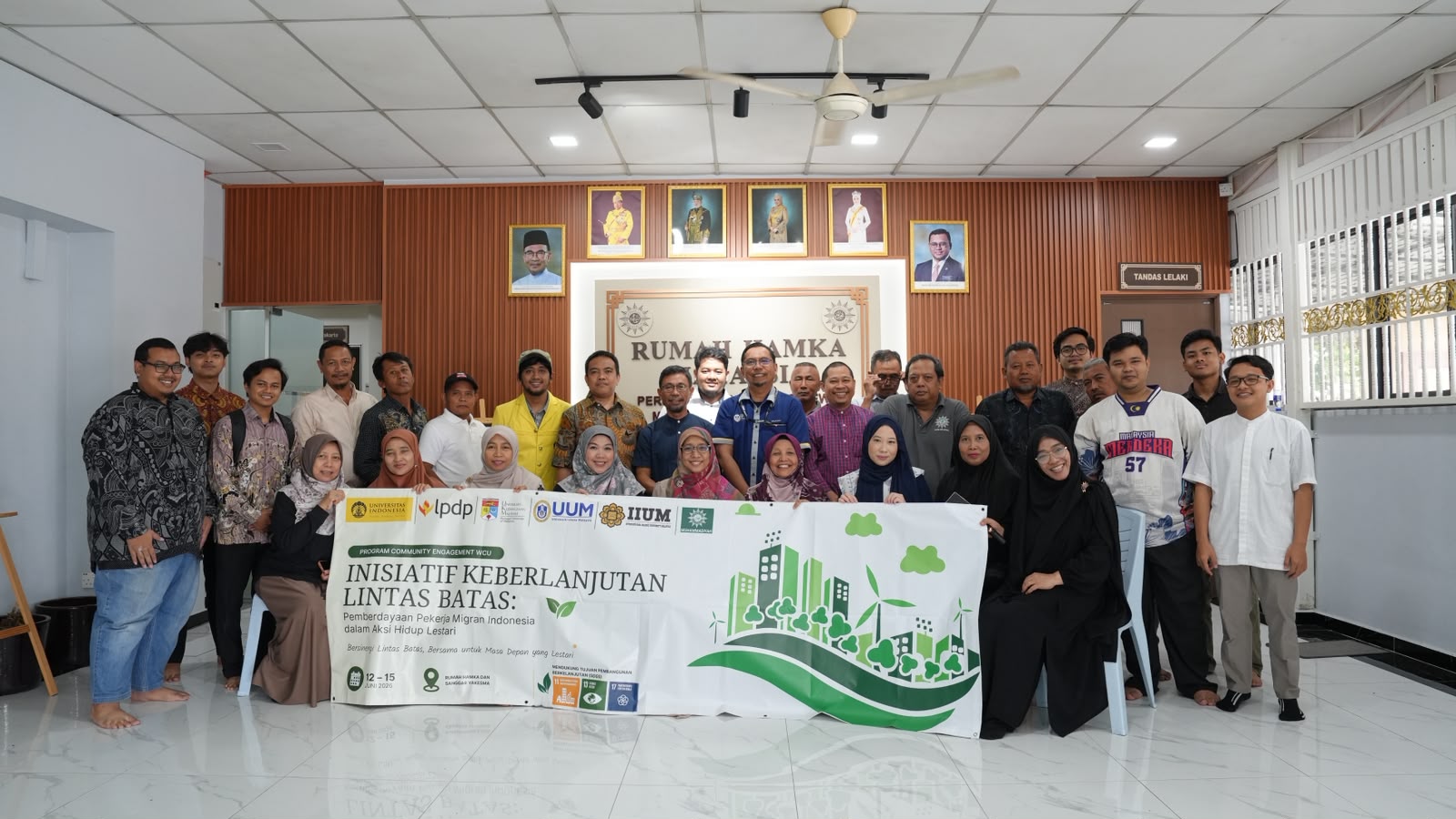
Environmental sciences should transcend national boundaries. Reflecting this commitment, the Graduate School of Sustainable Development of Universitas Indonesia (GSSD UI) recently conducted a cross-border community engagement initiative in Kuala Lumpur, Malaysia, introducing practical waste management and sustainable living practices to Indonesian migrant communities through interactive, hands-on learning.
The initiative, titled “Cross-Border Sustainability Initiative: Empowering Indonesian Migrant Workers through Sustainable Living Actions,” was supported by the World Class University (WCU) Community Development Grant administered by Universitas Indonesia’s Directorate of Partnership and Internationalization Services (DPIS) and funded by LPDP. The program was led by Dr. Herdis Herdiansyah, Environmental Science Department, GSSD UI, in collaboration with researchers and academics from Universiti Kebangsaan Malaysia (UKM), the International Islamic University Malaysia (IIUM), and Universiti Utara Malaysia (UUM).
Rather than relying on conventional classroom instruction, the program emphasized experiential learning by encouraging participants to transform environmental knowledge into practical actions that can be integrated into their daily lives. Activities were designed for two distinct groups, Indonesian migrant workers and the children of migrant workers, with learning approaches tailored to the specific needs of each audience.
At Rumah Hamka Malaysia, a community center managed by the Muhammadiyah Special Branch in Malaysia (PCIM), Indonesian migrant workers participated in an interactive session on sustainable household waste management. The discussion introduced the concept of “Choose, Separate, and Process” (Pilih, Pilah, Olah) as a simple yet effective framework for reducing household waste.
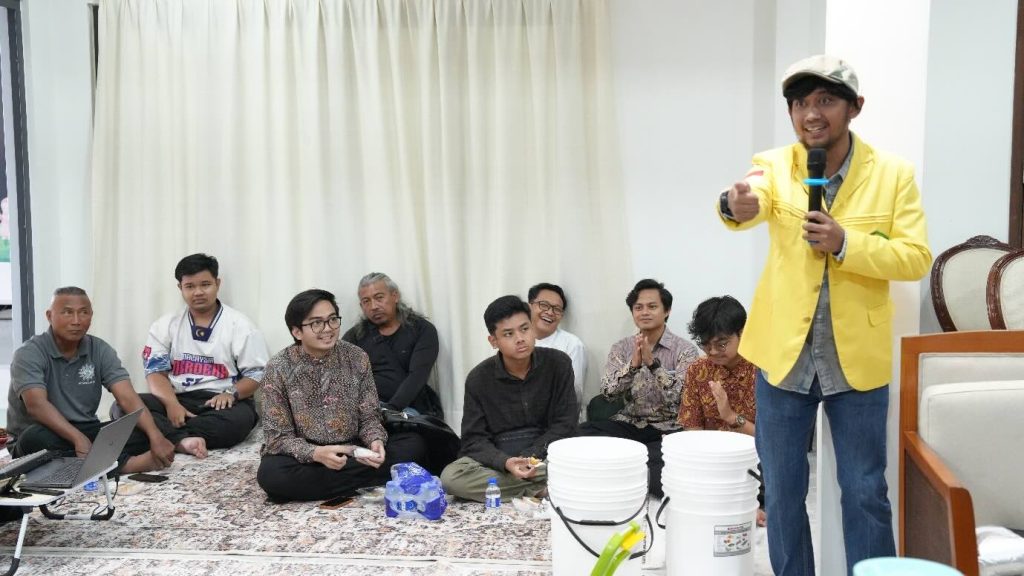
Participants explored how routine household activities contribute to municipal waste generation and discussed practical strategies for minimizing environmental impacts through proper waste segregation. The session concluded with a composting demonstration, during which participants learned how kitchen scraps and other organic waste can be converted into compost using affordable and easily replicable techniques. The hands-on activity encouraged participants to recognize organic waste as a valuable resource while equipping them with practical skills that can be applied in their own households.
The program continued at Sanggar Bimbingan Yakesma Wira Damai, where environmental education was delivered to children of Indonesian migrant workers. Many of these children have limited access to formal education because their parents live and work in Malaysia without official employment or residency documentation. Recognizing these challenges, the team adopted a play-based learning approach to ensure that environmental education was both accessible and engaging.
Following an introductory session on waste sorting and recycling, the children participated in EcoFunPoly, a large-scale educational board game designed to strengthen environmental awareness through collaborative learning. Throughout the activity, participants sorted different types of waste, answered questions related to recycling and environmental conservation, and completed interactive challenges that encouraged environmentally responsible decision-making. By combining education with play, the program created an enjoyable learning environment while fostering critical thinking, teamwork, and positive environmental habits from an early age.
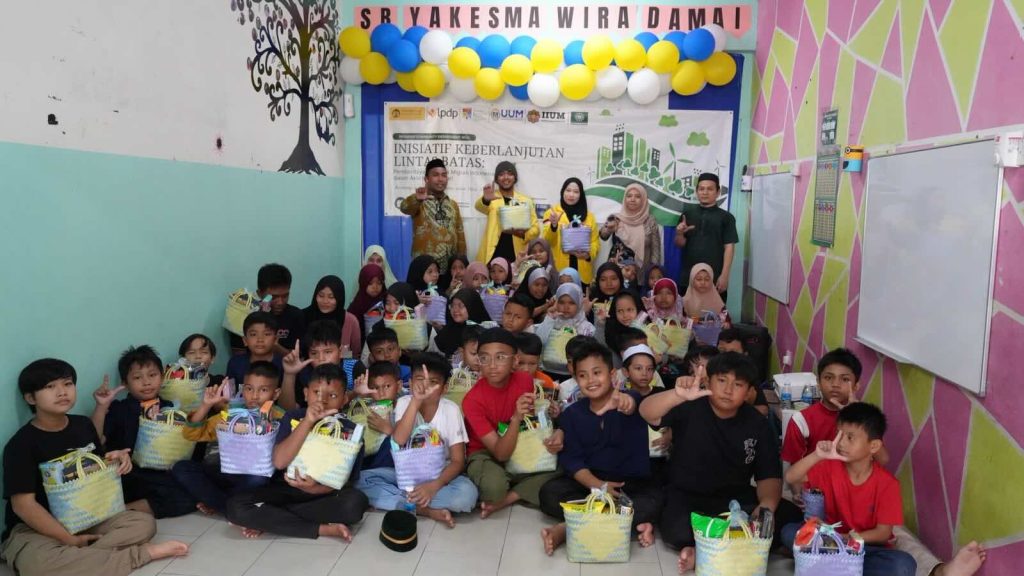
The initiative was warmly received by both participants and local partners. Lilis, a teacher at Sanggar Bimbingan Yakesma Wira Damai, expressed her hope that similar educational programs would continue in the future, providing children with greater opportunities to develop environmental awareness from an early age.
Dr. Zulfahmi of Universiti Utara Malaysia (UUM), one of the program’s collaborating partners, also emphasized the importance of sustained international collaboration in community engagement initiatives. He noted that future programs should remain flexible in accommodating the working schedules of migrant workers, whose availability often depends on their employers, while also aligning with the academic calendars of partner universities and student volunteers.
Beyond promoting knowledge of sustainable waste management, the initiative demonstrates the important role universities can play in advancing sustainable development through meaningful international partnerships. By working closely with Indonesian migrant communities in Malaysia, GSSD UI continues to strengthen environmental literacy, expand global academic collaboration, and encourage communities to become active contributors to environmental sustainability.
***