The Papua Provincial Government has expressed support for the development of a forestry sector capable of improving community welfare while preserving the environment, through the drafting of a forestry development roadmap and the transformation of forest management based on the Multi-Business Forestry (MUK) approach.
Papua Governor Mathius D. Fakhiri said the provincial government is open to initiatives that can strengthen the forestry sector’s contribution to the regional economy and indigenous communities through the application of sustainable forest management.
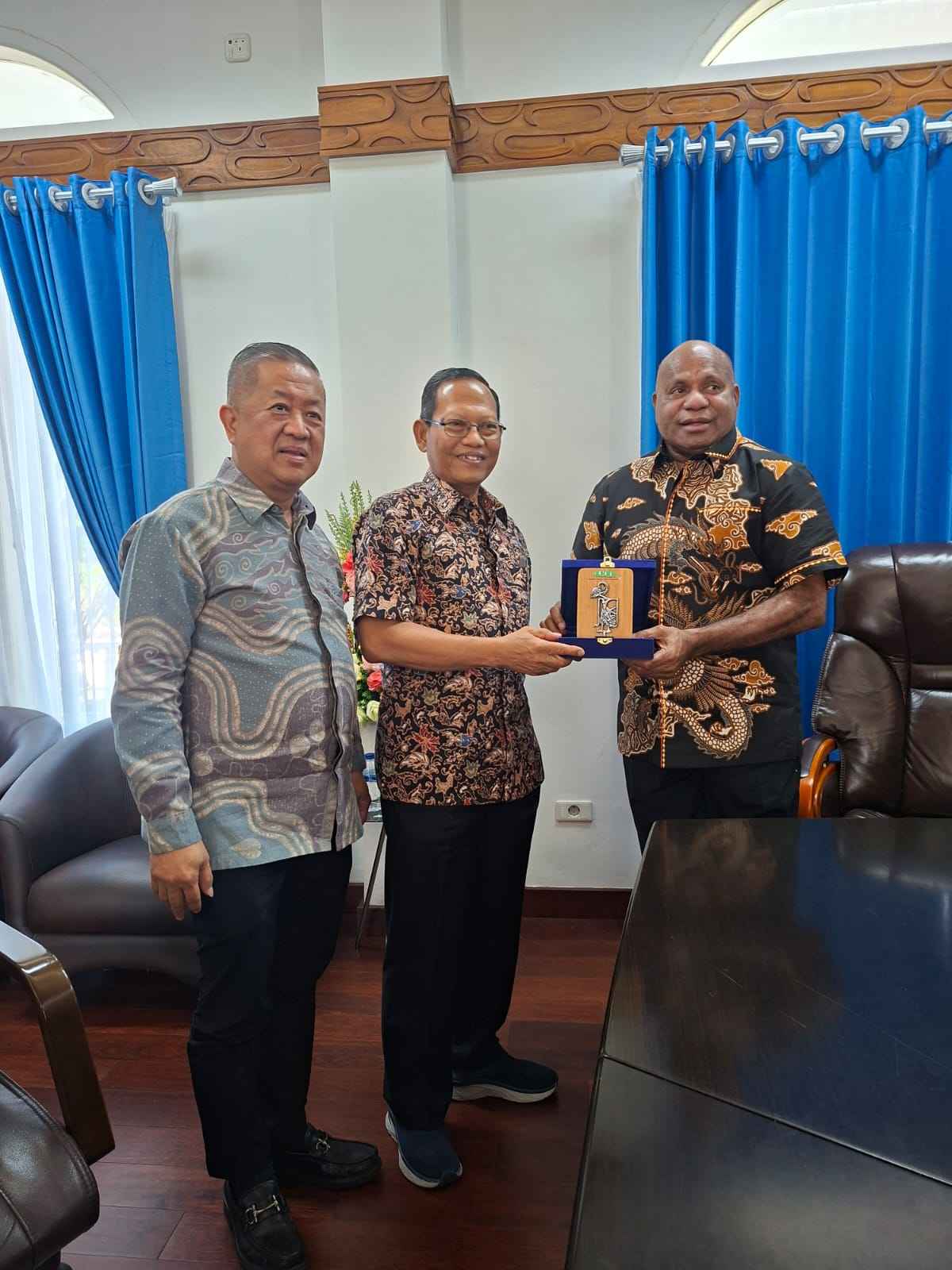
“We welcome programs that can increase business actors’ contribution to regional revenue while improving the welfare of the Papuan people through sustainable forest management that does not damage the environment. Papua wants to run, not just walk, in leveraging all its potential through collaboration with all parties and coordination with relevant ministries and agencies,” Mathius said when receiving a visit from the Indonesian Forest Entrepreneurs Association (APHI) Board of Directors at the Jayapura State Building on Wednesday.
He said the regional government is also continuing to strengthen supporting infrastructure, including upgrading Jayapura Port capacity and constructing a port in Sarmi Regency, to support the development of the forestry industry and the export of forest products from Papua.
Mathius said proposals for direct sawn timber exports from Papua and an expansion of processed timber cross-section policies need to be supported by scientific data and comprehensive studies incorporated into a Papua forestry development roadmap, to serve as the basis for policy coordination between regional and central governments.
APHI Chairman Soewarso said the association is conducting a roadshow to a number of regions to strengthen collaboration with regional governments, universities, and stakeholders in driving the transformation of the national forestry sector.
“Papua has enormous potential to develop forestry business transformation through the Multi-Business Forestry approach, which not only optimizes timber products but also non-timber forest products and environmental services. With aligned policy support between central and regional governments, Papua’s forestry sector can contribute far more to state revenue, regional income, infrastructure development, job creation, and community welfare,” Soewarso said.
He explained that APHI is pushing for the drafting of a medium to long-term Papua forestry development roadmap to guide a more competitive and sustainable sector capable of revitalizing the forestry industry from upstream to downstream. The roadmap is also expected to serve as a foundation for developing forest product processing industries closer to raw material sources, developing carbon environmental services while maintaining timber production sustainability, and refining policies to boost the competitiveness of Papua’s forestry products.
APHI also proposed several strategic policies during the meeting, including opening direct sawn timber export access from Papua, refining processed timber cross-section policies to improve the utilization of timber species beyond merbau, and harmonizing central and regional policies to accelerate the implementation of Multi-Business Forestry management transformation.
Beyond the meeting with the Governor, the APHI Board of Directors also held discussions with the Faculty of Agriculture, Forestry, and Marine Sciences at Universitas Ottow Geissler Papua, with both parties agreeing to follow up through a memorandum of understanding covering the implementation of the three pillars of higher education, public lectures, guest lectures, and internship programs for forestry students at APHI member companies. The meeting also discussed opportunities to strengthen forestry education financing through the optimization of customary rights compensation funds.
APHI subsequently held technical discussions with the Papua Provincial Forestry and Environment Agency on drafting a five to ten-year Papua forest management roadmap, expected to strengthen sustainable forest management, improve the productivity and competitiveness of forest products, develop in-region processing industries, strengthen carbon environmental services utilization, and deliver greater economic benefits for the government, indigenous communities, and the business world. The meeting also highlighted the importance of resolving social and tenurial conflicts collaboratively as a prerequisite for successful sustainable forestry development in Papua. (*)