
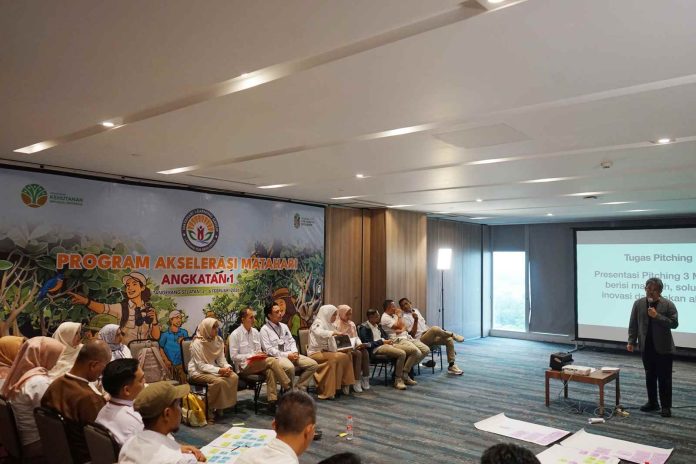
The Directorate of Mangrove Rehabilitation at the Ministry of Forestry (Kemenhut) has organized the first cohort of the MATAHARI Acceleration Program as a strategic effort to strengthen the leadership capacity of young civil servants (ASN) within the Ministry. The MATAHARI Acceleration Program—Manajer Tata Kelola Hutan dan Mangrove Lestari (Sustainable Forest and Mangrove Governance Managers)—is designed to equip young ASNs to become leaders capable of working across regions, disciplines, and organizational units in addressing the challenges of forest management and mangrove rehabilitation in Indonesia.
Indonesia is home to the world’s largest mangrove ecosystem, with more than 3.4 million hectares of mangroves stretching from Aceh to Papua, accounting for approximately 23 percent of the global mangrove area. Indonesia’s forest cover spans 95.5 million hectares, making it the country with the third-largest tropical forest area in the world, after Brazil and the Democratic Republic of Congo. Forest and mangrove management in Indonesia is extensive, transcends administrative boundaries, and requires the active contribution of multiple stakeholders. These conditions necessitate the presence of young leaders who understand local contexts and are able to collaborate at the national level. The MATAHARI Acceleration Program has been designed to respond to this need.
The MATAHARI Acceleration Program aims to address the complex challenges of managing forests and mangroves in Indonesia. Currently, the forestry sector faces conditions characterized by Turbulence, Uncertainty, Novelty, and Ambiguity (TUNA). As the manager of vast forest and mangrove areas, the Ministry of Forestry requires ASNs who are not only technically competent but also capable of agile leadership and adaptive vision. The program seeks to develop leaders who can work collaboratively to safeguard environmental sustainability amid a rapidly changing global landscape.
The first cohort of the MATAHARI Acceleration Program was attended by 80 young ASNs from various regions across Indonesia, with women comprising more than one-third of the participants. The participants completed 42 hours of training over five days in South Tangerang. Training modules included the Zero State Budget (Zero APBN) mindset, adaptive leadership, becoming architects of change (ecosystem builders), building adaptive and resilient teams, and effective communication. Participants also gained knowledge and practical insights from senior leaders in public relations and human resource management within the Ministry of Forestry, as well as from conservation experts.
The Director of Mangrove Rehabilitation emphasized that a leader’s integrity and adaptability are decisive factors in ensuring the sustainability of Indonesia’s forest and mangrove ecosystems. “The sustainability of [forest and mangrove] ecosystems is largely determined by the quality of leadership that manages them. Sound policies and strong regulations can fail if they are not supported by adaptive leadership with integrity,” the Director stated.
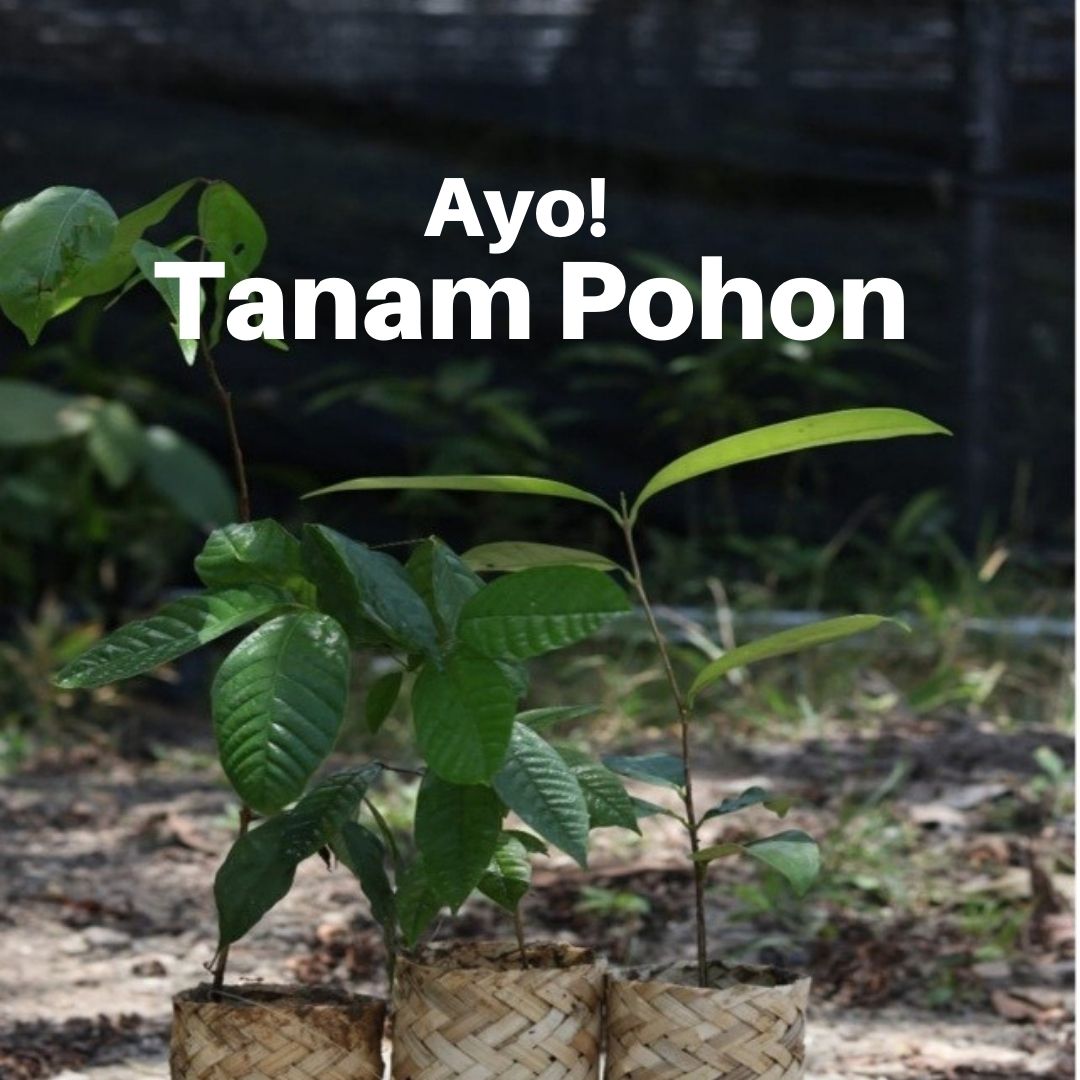
The MATAHARI Acceleration Program is an initiative of the Directorate of Mangrove Rehabilitation, Ministry of Forestry, and is supported by the Mangroves for Coastal Resilience (M4CR) Project. Through the M4CR Project, the Ministry of Forestry has strengthened the capacity of human resources managing mangrove forests and successfully planted 20.8 million mangrove seedlings during the 2024–2025 period. As of 2025, the M4CR Project has realized mangrove planting across 15,574 hectares in four priority provinces: North Kalimantan, North Sumatra, Riau, and East Kalimantan. (*)