
Watershed management has become a vital foundation for maintaining ecological balance and supporting the achievement of Indonesia’s FOLU Net Sink 2030 target. A watershed is not merely related to river channels; it constitutes an integrated landscape unit where human activities, forests, land, and ecosystems interact in a holistic manner.
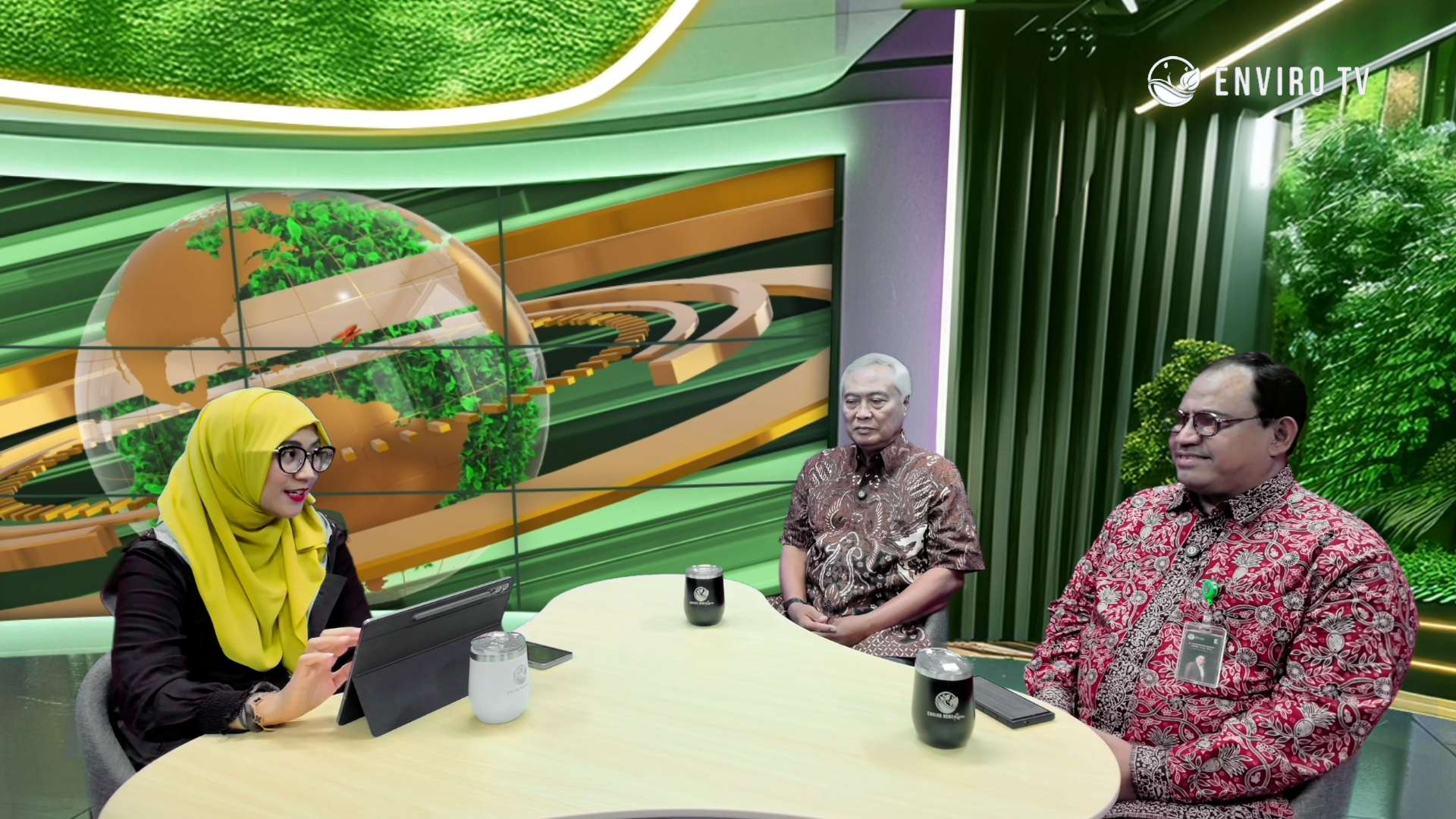
This issue was highlighted during an Enviro Talk discussion themed “DAS Tak Kenal Maka Tak Sayang” (“We Do Not Care for What We Do Not Know”), organized by Enviro News, featuring environmental observer Eka Sugiri and the Secretary of the Directorate General of Watershed Management and Forest Rehabilitation at the Ministry of Forestry, Muhammad Zainal Arifin, on Tuesday (December 30, 2025).
Eka Sugiri explained that a watershed is a landscape unit bounded by mountain ridges or hills, where rainwater falls, flows, infiltrates the soil, and ultimately drains into the sea. However, beyond functioning as a hydrological system, a watershed represents a shared living space for humans, flora, and fauna. “A watershed is not merely a landscape, but a common home for all of us. Within it are forestry, agriculture, plantations, settlements, and infrastructure. All of these activities take place within a single, interconnected system,” Eka stated. He emphasized that watersheds often cross administrative boundaries—spanning districts, provinces, and even national borders. Therefore, their management cannot be conducted in a sectoral or partial manner, but instead requires a shared vision among all stakeholders.
According to Eka, within the context of Indonesia’s FOLU Net Sink 2030 agenda, all programs and activities must be positioned as integral components of existing watershed systems. This approach is considered essential to ensure that carbon sequestration efforts, flood control, and landslide prevention can be implemented sustainably. “If we live within the same watershed, we must share the same vision. If different visions exist within the same home, the outcome will not be favorable,” he remarked.
Meanwhile, Muhammad Zainal Arifin stated that watershed management should be viewed as the management of a large system composed of various subsystems, both ecological and social. Consequently, watershed management is closely linked to spatial planning and land-use management. “There is still a prevailing perception that a watershed only consists of the areas on the left and right of a river. In fact, the entire landscape within it is part of the watershed. This is one large ecosystem,” Zainal explained.
He further noted that the government’s watershed management approach is implemented through forest and land conservation and rehabilitation as the primary entry points toward achieving FOLU Net Sink 2030. Effective watershed management is expected to safeguard biodiversity, strengthen environmental carrying capacity, and mitigate the risks of hydrometeorological disasters. “Good watershed management will ensure that ecological functions continue to operate, while simultaneously supporting carbon sequestration and reducing disaster risks,” he said.
Zainal added that watershed management is carried out collaboratively through Watershed Forums, as mandated by Government Regulation No. 37 of 2012. These forums involve the central government, local governments, academics, the private sector, and communities in the formulation of Integrated Watershed Management Plans (RP-DAS). According to him, the main challenges in implementing watershed management are not only technical, but also social—particularly in aligning the diverse interests of stakeholders operating within the same landscape. “Watershed management is not only about managing the land, but also about managing the communities within it. Coordination and collaboration are key,” he emphasized.
The discussion also underscored the importance of the role of younger generations and early education in building awareness that every human activity has an impact on watershed conditions. The government, Zainal noted, encourages greater understanding of watersheds through formal education and community involvement in forest and land rehabilitation activities. At the conclusion of the discussion, both speakers agreed that watershed sustainability will play a decisive role in determining the quality of life in the future, as well as the success of the national climate agenda.
***