The Indonesian government is continuing to advocate for improved access to international climate finance to support climate change mitigation and adaptation efforts, including in the forestry sector.
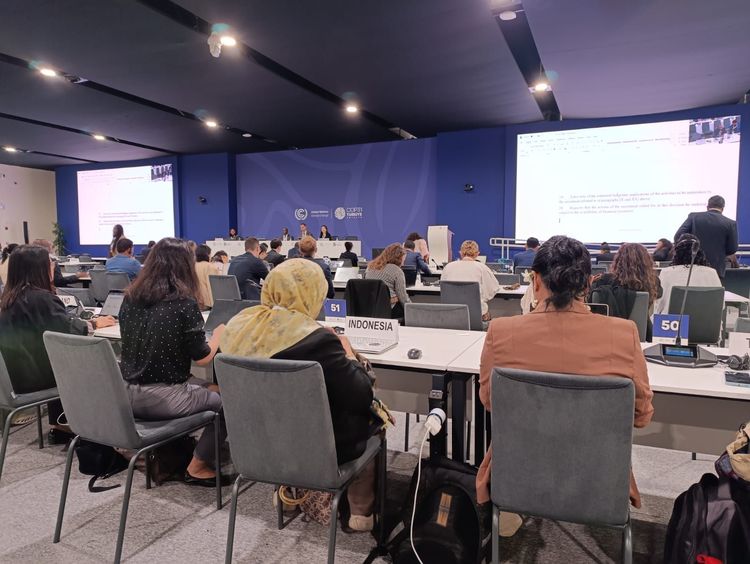
The issue has become a key focus of negotiations at the 31st United Nations Climate Change Conference (COP31) in Antalya, Türkiye, particularly through discussions on the Green Climate Fund (GCF) and the Global Environment Facility (GEF), two important financing mechanisms supporting climate action in developing countries.
Indonesia has emphasised the need for climate finance that is adequate, predictable, accessible, and sustainable.
Such support should increasingly prioritise grants and concessional financing, accompanied by simplified application procedures and faster disbursement of funds.
These measures are essential to ensuring that international financing commitments translate into concrete activities aligned with national development needs and priorities.
One of the main financing instruments under discussion is the Green Climate Fund (GCF), a multilateral climate fund that supports developing countries in reducing greenhouse gas emissions and strengthening resilience to the impacts of climate change.
According to COP31 negotiation documents, the GCF has approved US$20.4 billion in funding for 359 mitigation and adaptation projects and programmes across 135 developing countries.
These achievements reflect the GCF’s important role in supporting climate action worldwide.
In discussions on the GCF, Indonesia is calling for increased funding availability through the Fund’s third replenishment (GCF-3), alongside stronger direct access to financing through national institutions.
Indonesia has also highlighted the importance of project preparation support and capacity building for implementing institutions to ensure that climate finance is used more effectively, transparently, and in line with the priorities of developing countries.
In addition to the GCF, the Global Environment Facility (GEF) serves as another important financing mechanism supporting climate change mitigation and environmental protection in developing countries.
COP31 discussions on the GEF include strengthening financial resources through its ninth replenishment (GEF-9), accelerating access to financing, and expanding support for technology development and capacity building.
The GEF also places particular emphasis on strengthening the participation of Indigenous Peoples and local communities in conservation activities and sustainable natural resource management.
The GEF further supports climate transparency by strengthening the institutional and technical capacities of developing countries to implement the Enhanced Transparency Framework (ETF) under the Paris Agreement.
This support is particularly relevant to improving Indonesia’s forestry-sector climate monitoring and reporting systems, including efforts to strengthen the credibility of reported emissions reductions and increased carbon sequestration.
Improved access to financing through the GCF and GEF could create opportunities to support several national forestry priorities.
These include achieving Indonesia’s FOLU Net Sink 2030 target, strengthening forest protection and sustainable forest management, rehabilitating forests and degraded land, restoring peatland and mangrove ecosystems, and improving watershed management.
International support could also accelerate the implementation of ecosystem-based adaptation measures and strengthen climate-responsive forestry governance.
These financing opportunities are expected to deliver tangible benefits to communities living within and around forest areas.
Through Social Forestry programmes, customary forest management, agroforestry development, and non-timber forest product enterprises, communities can gain opportunities to increase their incomes while actively contributing to forest conservation.
Ecosystem protection and restoration are also expected to help safeguard water resources, reduce disaster risks, and strengthen the resilience of community livelihoods to climate change.
***