
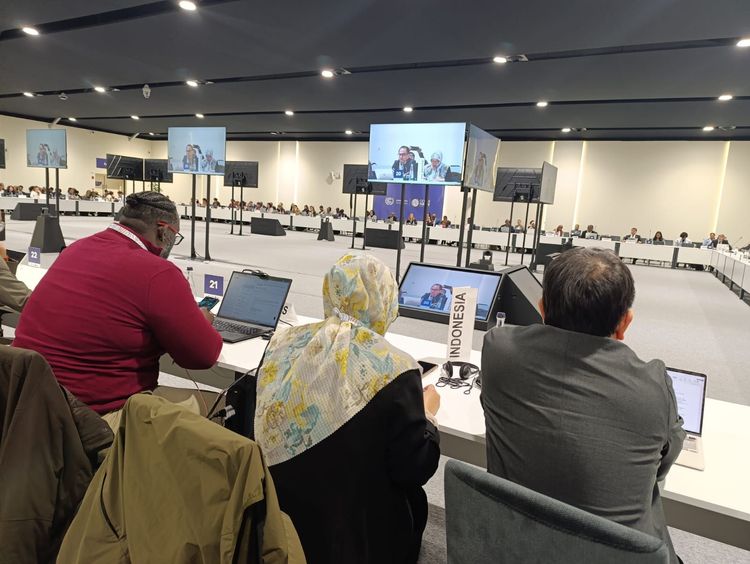
Indonesia is calling for increased climate adaptation finance for developing countries at the United Nations Climate Change Conference (COP31) in Antalya, Türkiye. Greater financial support is needed to accelerate adaptation efforts, strengthen ecosystem resilience, and protect communities from the growing impacts of climate change.
A key issue in the negotiations is the follow-up to COP30’s call to at least triple adaptation finance by 2035. Discussions at COP31 include a proposal to increase adaptation finance for developing countries to at least US$120 billion annually by 2035.
The proposed figure remains under negotiation, including discussions on the calculation methodology, the timeline for scaling up funding, and mechanisms for monitoring implementation.
During discussions on adaptation and climate finance, Indonesia emphasised the need for adequate, sustainable, accessible, and predictable international support. Increased funding must address the needs of developing countries and reach the communities and ecosystems most vulnerable to climate change.
Indonesia also highlighted the importance of strengthening public finance from developed countries, particularly through grants and other instruments that do not increase debt burdens.
Such support should respect national circumstances and priorities while avoiding additional requirements that could make it more difficult for developing countries to access adaptation funding.
COP31 discussions also addressed the implementation of the Global Goal on Adaptation (GGA), particularly the operationalisation of the 59 Belém Adaptation Indicators adopted at COP30.
One of the proposals under consideration is the establishment of a technical task force to refine the metadata and methodologies associated with these indicators.
The indicators are expected to help measure collective progress on adaptation and strengthen shared learning while taking into account national circumstances, priorities, and capacities.
Their implementation should also avoid imposing disproportionate reporting burdens on developing countries.
Following Indonesia’s submission of its National Adaptation Plan (NAP) in 2025, stronger international support is expected to accelerate the implementation of adaptation programmes that deliver tangible benefits on the ground.
Financing, capacity building, and technology support are essential to translating adaptation plans into measurable outcomes.
For the forestry sector, increased adaptation finance could support forest and land rehabilitation and restoration, the protection and recovery of peatland and mangrove ecosystems, watershed management, and stronger community resilience through Social Forestry and customary forest management.
These programmes should be designed around climate risks and aimed at delivering measurable adaptation benefits, including safeguarding water availability and reducing vulnerability to floods, landslides, droughts, and forest and land fires.
They can also generate additional benefits through biodiversity conservation, emissions reductions, and increased carbon sequestration, contributing to Indonesia’s FOLU Net Sink 2030 target.
For forest-dependent communities, adaptation also means strengthening livelihoods to better withstand the impacts of climate change.
Through locally appropriate agroforestry practices, the sustainable use of non-timber forest products, and the development of forest-based enterprises, communities can diversify their income sources while maintaining essential ecosystem functions.
Indonesia stressed that the success of increased adaptation finance should be reflected in easier access to funding, its effective and appropriate use, and tangible benefits for communities.
The Ministry of Forestry remains committed to strengthening the forestry sector’s contribution to climate resilience through sustainable ecosystem management and active community participation.
***