Indonesia has called for stronger international forest financing mechanisms that are fairer, more sustainable, and easier to access without increasing the debt burden on developing countries.
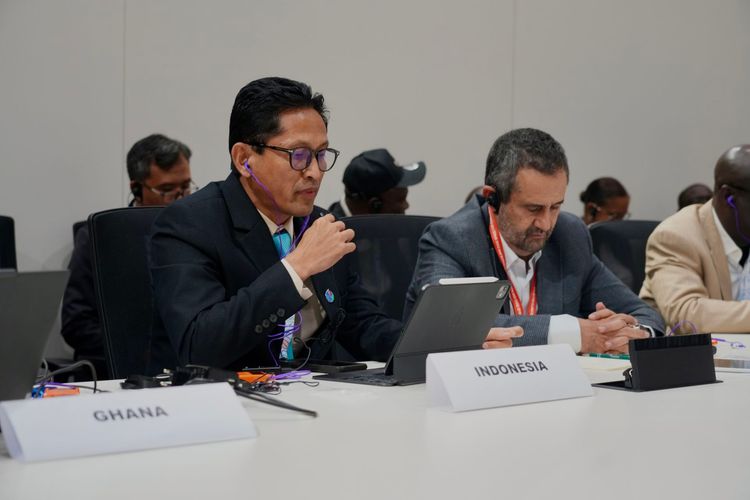
The position was presented by Indonesia’s Ministry of Forestry during the Global South Ministerial Dialogue on Forest Finance and Land Tenure, held on the sidelines of the 31st United Nations Climate Change Conference (COP31) in Antalya, Türkiye, on Monday (16 November).
The ministerial meeting, facilitated by Guyana as Co-Chair of the Global South countries within the Forest and Climate Leaders’ Partnership (FCLP), brought together tropical forest countries to discuss accelerating forest conservation financing, securing land tenure rights, and strengthening cooperation among developing nations.
The forum also addressed the global forest financing gap, estimated at US$66.8 billion annually.
Indonesia was represented by Julmansyah, Director of Tenurial Conflict Resolution and Customary Forests at the Ministry of Forestry, and Dian Nugraha, Head of Bilateral and Regional Cooperation.
The Indonesian delegation stressed that the main challenge in forest financing is not a lack of international initiatives or commitments, but the limited availability of predictable, sustainable funding that effectively meets the needs of tropical forest countries.
Indonesia emphasised that the success of international financing partnerships should be measured not by the size of announced commitments, but by tangible outcomes, including funds actually disbursed, hectares of forest protected, and improvements in community well-being.
In this context, international public finance, particularly grants and results-based payments, should remain the primary instruments for supporting tropical forest conservation.
As an example, Indonesia highlighted progress in its partnership with Norway, including the announcement of a fifth Results-Based Contribution (RBC 5) worth US$100 million at COP31, following four previous contributions totalling US$216 million.
Indonesia also cited its experience in securing REDD+ payments through the Green Climate Fund (GCF), demonstrating how independently verified emissions reductions can provide a basis for international financial support.
Indonesia expressed openness to developing innovative financing mechanisms, including the Tropical Forest Forever Facility (TFFF), a sustainable forest bioeconomy, and high-integrity carbon markets.
However, the government stressed that private investment should complement, rather than replace, public financing responsibilities and support from developed countries.
Countries that protect forests and provide environmental benefits to the global community should not be required to take on additional debt to fulfil that responsibility.
Beyond financing, Indonesia highlighted the importance of secure land tenure and forest management rights for local communities.
Through its Social Forestry programme, Indonesia has granted forest management access to more than 8.3 million hectares of forest areas, benefiting approximately 1.4 million families.
The government is also accelerating the recognition of customary forests and the resolution of land tenure conflicts to strengthen legal certainty, ecosystem protection, and the livelihoods of forest-dependent communities.
In this regard, Indonesia expressed support for stronger cooperation through the Intergovernmental Land Tenure Commitment (ILTC), while emphasising the need to respect national laws, institutions, and circumstances.
Indonesia stressed that recognising community rights must be accompanied by stronger local institutions, capacity building, financial support, and the development of sustainable forest-based enterprises to ensure tangible benefits for communities.
The Guyana-led meeting also featured perspectives from several countries, including Bolivia, the Republic of the Congo, Nigeria, the Democratic Republic of the Congo, Mexico, Ghana, and Belize.
Delegates highlighted the need to simplify access to financing, increase investment, and strengthen community rights.
During discussions on financing instruments, several countries expressed interest in exploring debt-for-nature swaps. Indonesia, however, reiterated its preference for grants and results-based contributions that do not increase the debt burden on developing countries.
Through the dialogue, Indonesia called for international forestry cooperation to become more focused on implementation, with simpler financing requirements, respect for national systems, and equitable benefit-sharing mechanisms.
The Ministry of Forestry reaffirmed that the success of global forest financing must be reflected in sustained forest protection, stronger community rights, and tangible economic benefits for people living in and around forest areas.
***