Indonesia’s Ministry of Forestry has reaffirmed its commitment to accelerating the recognition and formal designation of approximately 1.4 million hectares of customary forests between 2025 and 2029. The initiative aims to strengthen Indigenous Peoples’ land rights, protect forest ecosystems, and improve community resilience to climate change.
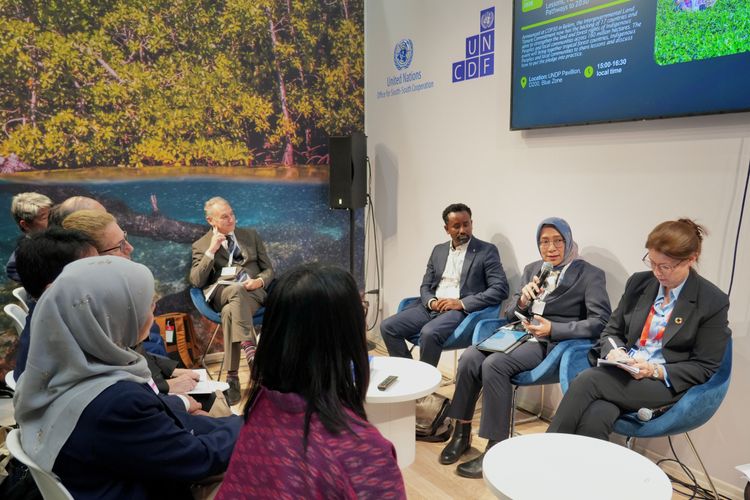
The commitment was outlined by Catur Endah Prasetiani, Director General of Social Forestry, during a forum titled “Advancing Indigenous Peoples’ and Local Communities’ Tenure Rights: Lessons, Partnerships, and Pathways to 2030” at the UNDP Pavilion during the 31st United Nations Climate Change Conference (COP31) in Antalya, Türkiye, on Monday (16 November).
During the forum, organised by the United Nations Development Programme (UNDP) and the UN-REDD Programme, Catur Endah presented Indonesia’s progress in strengthening the recognition and protection of Indigenous Peoples’ rights.
As of October 2026, the government had formally designated 177 customary forests covering 376,280 hectares across 21 provinces and 46 districts, benefiting approximately 93,859 households.
“Recognising customary forests is not simply about the size of the area or the number of decrees issued. Each designation represents recognition of Indigenous Peoples’ identities, territories, institutions, and rights, as well as their role in protecting forests and biodiversity,” Catur Endah said.
To accelerate the process, the Ministry of Forestry continues to strengthen national policy and institutional frameworks.
Key measures include the National Customary Forest Roadmap 2025–2029, established under Minister of Forestry Decree No. 440 of 2026, and the formation of a Task Force for Accelerating Customary Forest Designation under Minister of Forestry Decree No. 121 of 2026.
Efforts to strengthen verification capacity are also supported by guidelines for prospective verifiers issued under Director General of Social Forestry Decree No. 71 of 2025.
Catur Endah explained that accelerating customary forest designation requires cooperation among a wide range of stakeholders, including central and regional governments, Indigenous Peoples, civil society organisations, academics, and development partners.
The collaboration focuses on aligning data, conducting participatory verification, strengthening forest governance, and resolving land tenure issues that remain challenging in various regions.
Under this approach, Indigenous Peoples are recognised as rights holders and equal partners in planning and decision-making.
The Ministry also promotes access to information, the use of reliable and verifiable data, and the exchange of knowledge and field experience to ensure that the designation process is participatory, equitable, and sustainable.
“Political commitments only become meaningful when translated into concrete, coordinated action. Indonesia’s experience shows that accelerating the recognition of customary forests requires clear policies, strong institutions, inclusive processes, and cooperation among all stakeholders,” Catur Endah explained.
Looking ahead to 2030, the Ministry of Forestry has identified five priorities: accelerating land tenure security while maintaining rigorous verification standards; strengthening collaborative financing; improving data coordination and participatory verification; reinforcing forest governance and community resilience following designation; and establishing transparent and accountable implementation mechanisms.
These priorities are intended to ensure that the recognition of rights is followed by stronger community institutions, sustainable livelihood development, and long-term forest protection.
The forum was part of the follow-up to the Intergovernmental Land Tenure Commitment (ILTC), an international pledge announced at COP30 in Belém, Brazil, in 2025.
The commitment seeks to strengthen land tenure rights and forest governance for Indigenous Peoples and local communities across 160 million hectares in tropical forest countries.
Through the forum, participating countries exchanged experiences on policy progress, institutional challenges, and practical measures to achieve forest and land rights protection targets by 2030.
Alongside Indonesia, the forum brought together representatives from tropical forest countries, including Peru, Ecuador, Cambodia, and the Philippines, as well as international partners and Indigenous Peoples’ organisations.
The UNDP-facilitated discussion explored lessons from countries supporting the ILTC, including efforts to strengthen the recognition of rights, address implementation barriers, and expand partnerships for community-led forest management.
Catur Endah reaffirmed Indonesia’s commitment to strengthening partnerships through the National Customary Forest Secretariat, national and international networks, and knowledge exchange with ILTC partner countries.
“Indigenous Peoples are not merely beneficiaries. They are rights holders, custodians of local knowledge, and guardians of forests. Their role is essential to biodiversity conservation and climate resilience. Let us move forward together—from commitments to action, from recognition to resilience, and from partnerships to collective resilience,” Catur Endah concluded.
***